The Geography Problem in Football
Why proximity, competition density, and local ecosystems matter more than isolated facilities in player development

Football development is often discussed in terms of coaching, facilities, talent identification and money. But there is another factor that does not get nearly enough attention — geography!
How far does a young player have to travel to find another good team? It sounds like a simple question, but it can have a huge effect on development.
The Proximity Advantage: How the Netherlands Embeds Football
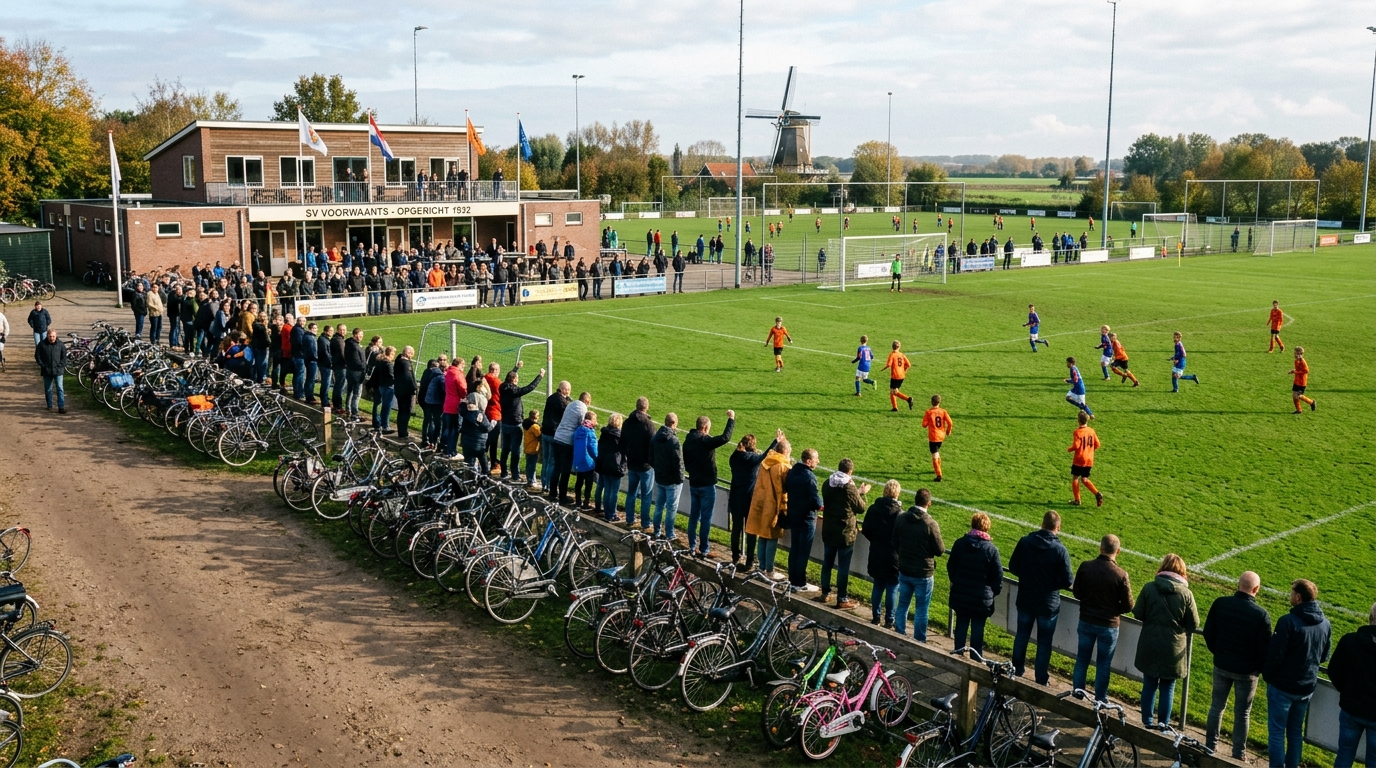
Consider the Netherlands. It is a relatively small country in terms of area, yet football is deeply embedded across almost every community. The KNVB says that every Dutch municipality has at least one football club, while the average person lives only 1.6 kilometres from a football club. The country has thousands of amateur clubs and hundreds of thousands of matches every year.
That creates something extremely valuable for young players: competition is nearby.
A player does not necessarily need to travel hundreds of kilometres to find another academy. There are clubs, schools and teams around them. If one team is too strong or too weak, another opponent can potentially be found relatively close by. This matters because players do not develop only through training. They develop through playing. They need to repeatedly experience situations that challenge them. They need opponents who are fast enough to punish mistakes, intelligent enough to create problems and technically good enough to force them to adapt.
The Scale Dilemma: India and China
Now compare this with countries like India and China.
India is enormous geographically, with football development concentrated heavily around particular cities and regions. A young player might have access to a good academy in their city, but finding another academy of a similar level can be difficult depending on where they live.
China faces a similar problem at an even larger geographical scale, with football schools heavily concentrated in eastern regions and major economic areas, while western regions have much lower density. China has actually created tens of thousands of football speciality schools, but simply having more schools does not automatically solve the problem. If the quality and distribution of those schools are uneven, players can still have limited access to strong competition.
“Both players may have good coaches. Both may have access to good facilities. But their football environments are completely different. The second player simply has fewer opportunities to experience different problems.”
A Tale of Two Twelve-Year-Olds
Imagine two twelve year olds. One lives in a Dutch town where several clubs are within a short distance. They train three times a week and can play against different teams regularly. The other lives in an Indian city where their academy is good, but the next comparable academy is several hours away. Their team might play the same few opponents repeatedly because travelling further is expensive and difficult.
Both players may have good coaches. Both may have access to good facilities. But their football environments are completely different. The second player simply has fewer opportunities to experience different problems.
Building Local Ecosystems: Clusters of Football
So what can countries like India do? I don't think the answer is to try to copy the Netherlands directly. India cannot suddenly become geographically smaller. Instead, we need to make football communities smaller. If the country cannot reduce the distance between cities, we can reduce the distance between football organisations within cities and regions.
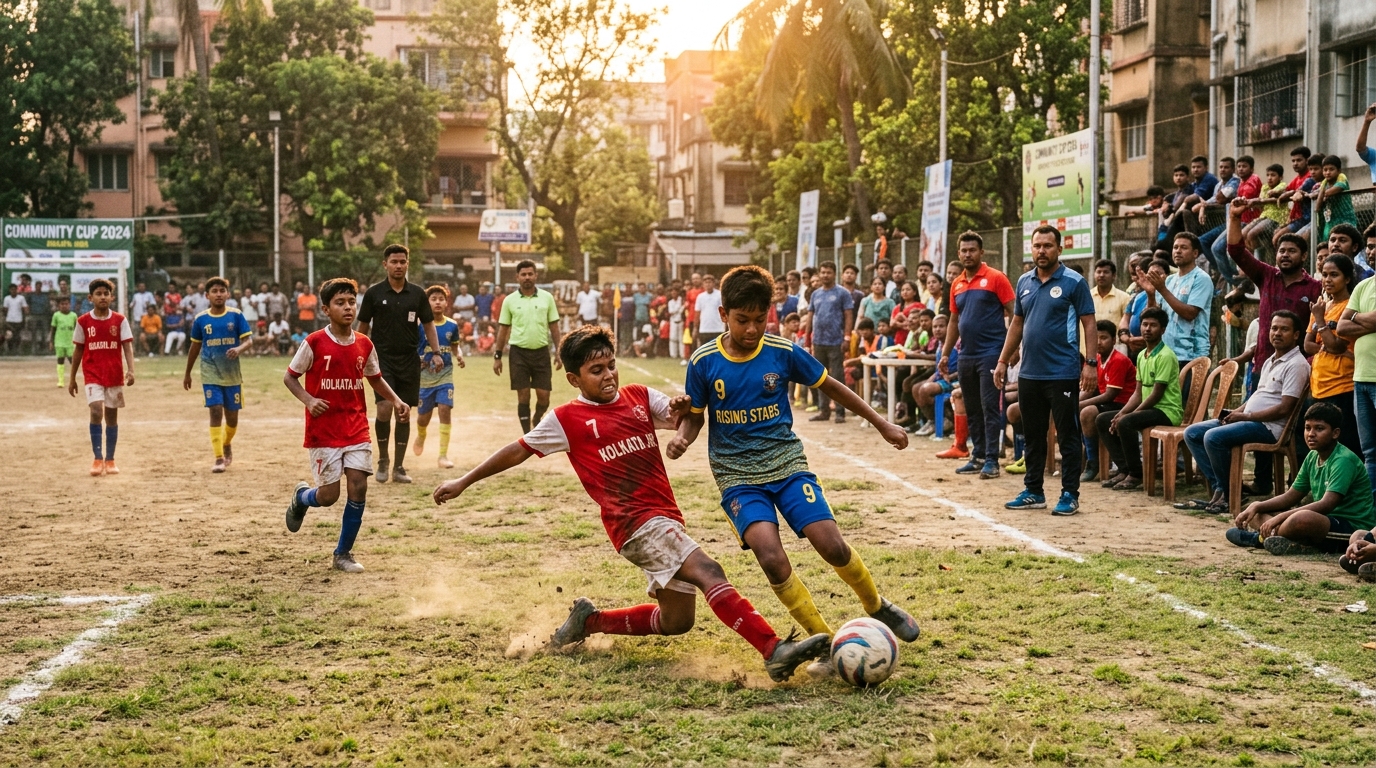
Imagine creating local football ecosystems. A city could have twenty schools, ten academies, several community clubs and local coaches working within the same development network. From cities and towns, there can emerge regions. Instead of every academy operating independently, they could share regular festivals, small sided competitions, coach education and player development programmes.
The important thing is that competition becomes frequent and accessible. A player in Nagpur should not need to travel to Mumbai or Bengaluru every month to find meaningful opposition. There should be enough football within a city and the surrounding region to challenge them regularly.
The goal should be to create clusters of football. Within each cluster, you could have different levels of competition. Beginners could play against beginners. Developing players could play against stronger teams. The best academies could compete against each other regularly.
Then, once or twice a year, these clusters could connect through larger regional or national competitions. This creates a pyramid.
Football as a Social Fabric
It also has another benefit — giving football a community. The Dutch model is not powerful simply because there are professional academies. It is powerful because football exists everywhere. The KNVB describes football as a major social network, with around 2,800 amateur clubs and 1.2 million members. That is something India can learn from without copying the country itself.
“We cannot change India's geography, but we can change how football is organised within that geography. The question should not be, 'How do we find the next great academy?' It should be, 'How do we make sure that every young player has good football within reach?'”
We cannot change India's geography but we can change how football is organised within that geography. Perhaps the question for Indian football should therefore not be, “How do we find the next great academy?” It should be, “How do we make sure that every young player has good football within reach?”