Before You Say a Word - The Importance of a Coach's Body Language
Young players are not only listening to what you say — they are watching how you say it. Why open posture, approachable reactions, and emotional safety define coaching impact.
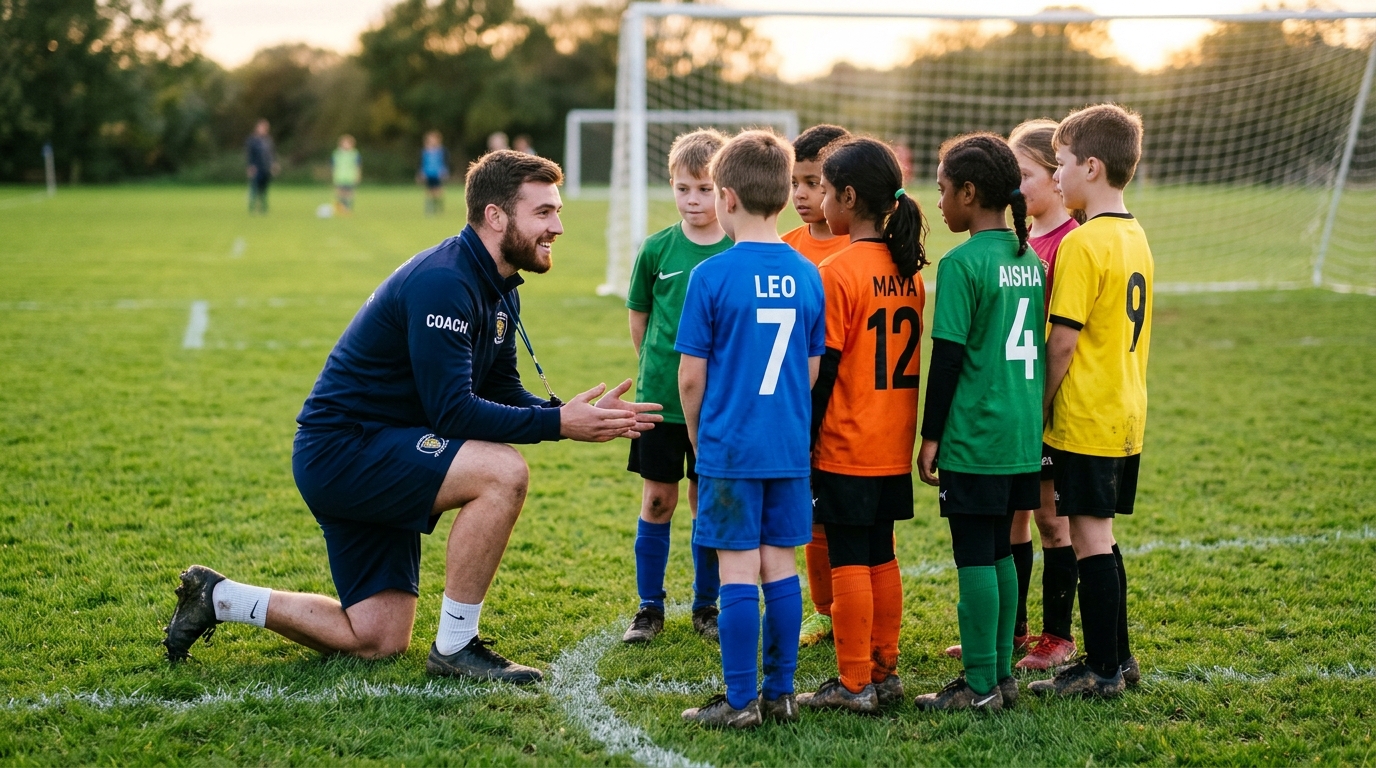
When we think about communication between a coach and a player, we often think about the words being spoken. Instructions, corrections, encouragement and feedback are all important parts of coaching. However, there is another form of communication that we sometimes overlook — body language.
A coach communicates even when they aren't speaking. The way they stand, their facial expressions, their gestures and their reactions to players can influence how children perceive them. For young players, who are still learning to understand people and their surroundings, these small things can have a much bigger impact than we realise.
From Closed Posture to Open Connection
I have come to understand this through my own experience as a coach. When I first started coaching, I often found myself standing with my arms folded, keeping my posture relatively closed and remaining somewhat compact within myself. It wasn't something I did deliberately. I wasn't trying to appear distant or unapproachable. It was simply how I carried myself. I would communicate when necessary, give instructions and observe the session, but I hadn't fully considered what my body language might have been communicating alongside my words.
Over time, I began to understand — with help from others, obviously — that coaching involves much more than knowing what to say. It also involves understanding how you present yourself to the players.
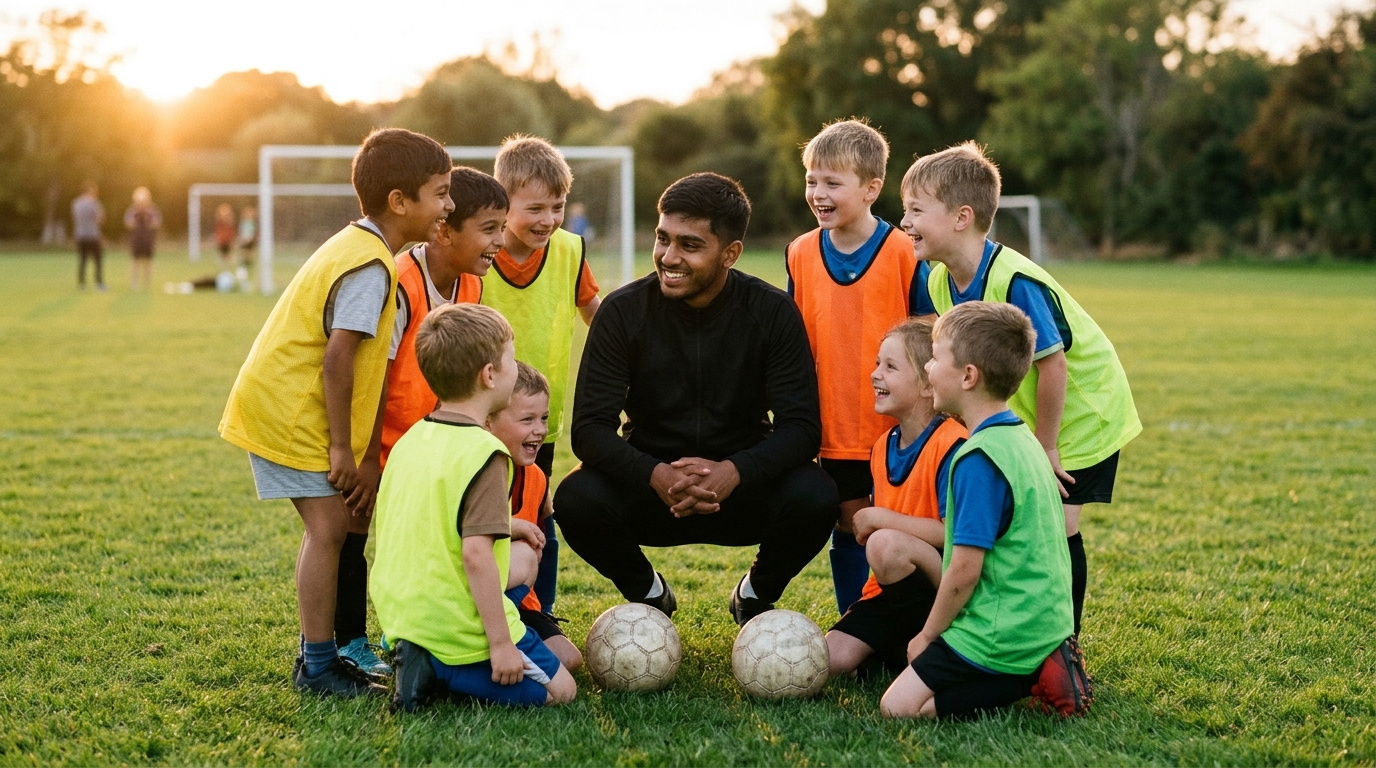
I have gradually become more open in the way I carry myself. I am more vocal during sessions, use more gestures, interact with the children and occasionally throw in a joke or two. A little humour can make the atmosphere lighter and help children feel more comfortable around their coach. I have noticed how important it is to create an environment where they aren't constantly worried about getting something wrong or being judged. I still want to become more animated, and I know there is room for improvement. But recognising this has already changed the way I approach my sessions.
“Coaching involves much more than knowing what to say. It also involves understanding how you present yourself to the players.”
How Children Read Reactions to Mistakes
For children, a coach's body language can be particularly important because they are still developing their confidence and understanding of the game. Imagine a child attempting something new during training. They try to dribble past an opponent, lose possession and immediately look towards the coach. Before the coach has even said anything, the child might already be reading their expression. A disappointed face or a frustrated gesture might make that child hesitant to try again. Even if the coach follows it up with encouraging words, the initial reaction may have already affected how the child feels.
Now consider the opposite. The coach acknowledges the attempt, offers a smile and encourages the child to try again. The mistake hasn't disappeared, and the player still needs to learn from it. However, the child is more likely to feel comfortable attempting the same action again.
This doesn't mean that coaches should hide their emotions or pretend that everything is always fine. There are moments when players need correction, accountability and clear feedback. But there is a difference between showing frustration at a situation and making a child feel that they are the source of your frustration. Our reactions have consequences, even when we don't intend them to.
Building Trust, Approachability and Joy
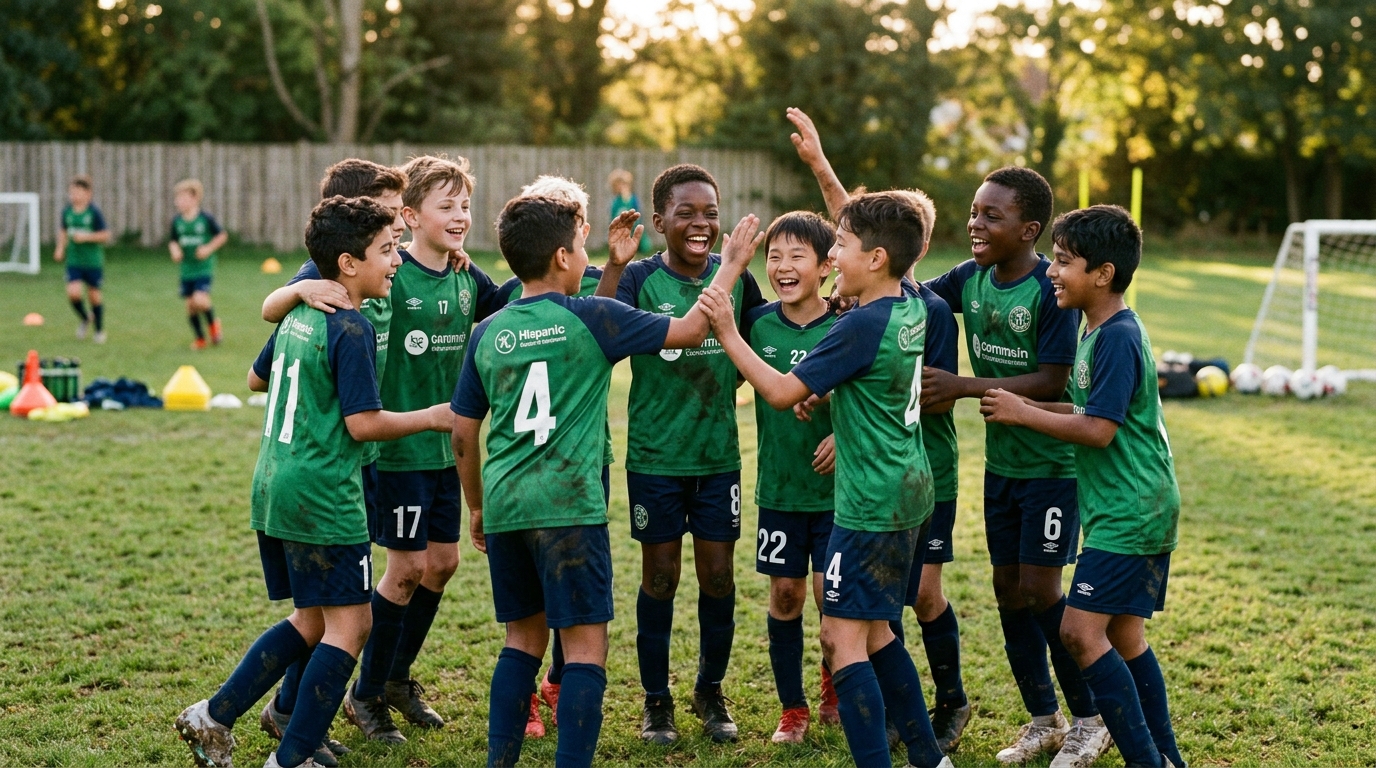
Body language also plays an important role in building relationships. An open posture, eye contact and a welcoming expression can make a coach seem more approachable. Sometimes, a child might not have the confidence to approach you directly. A small gesture or a friendly expression can make that interaction easier.
I also believe that coaches should not underestimate the importance of having fun during sessions. Football is a game, after all. Children should be able to laugh, enjoy themselves and feel excited about coming to training. Being vocal and expressive, celebrating good actions and sharing a joke can all contribute to that environment. Of course, this doesn't mean that a coach needs to be animated every second. There is a time to celebrate, a time to encourage, a time to listen and a time to remain calm. The important thing is recognising what the situation demands. A coach's body language should support the message rather than distract from it.
I have also realised that children observe far more than we sometimes give them credit for. They notice how we treat different players, how we respond when things don't go according to plan and how we carry ourselves when we are frustrated. Our behaviour becomes part of their learning environment.
More Than Words
Perhaps the most important lesson for me has been understanding that being a good communicator isn't simply about having the right words. It is about making sure that the way we communicate, both verbally and nonverbally, supports the message we are trying to deliver. I am still learning to become a more expressive and animated coach. There are things I have changed and others I want to improve. But I now pay much more attention to how I carry myself during sessions, because I understand that the children in front of me are not only listening to what I say. They are also watching how I say it.
Sometimes, the most important thing a coach communicates to a child is not an instruction or a correction. It is the simple reassurance that they are welcome to try, make mistakes, ask questions and keep learning, and that message often begins before we say a word.
“Sometimes, the most important thing a coach communicates to a child is not an instruction or a correction. It is the simple reassurance that they are welcome to try, make mistakes, ask questions and keep learning — and that message often begins before we say a word.”