Learning to Compete: What Matches Have Taught Me As A Coach
Reflections from Sportians Nagpur FC on pitch dimensions, tournament defeats, and why matches are our greatest teacher
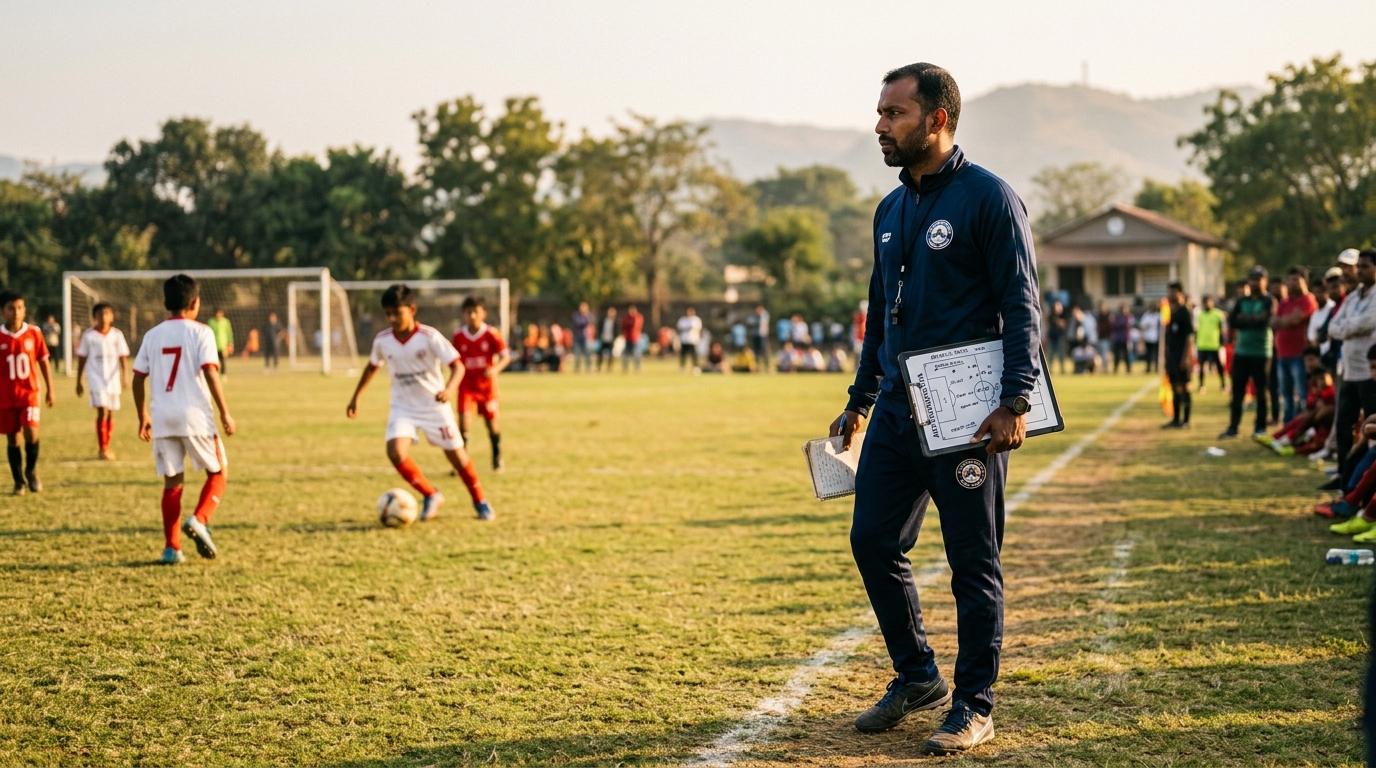
One of the things I have been trying to do with my players at Sportians Nagpur FC is give them more opportunities to play matches. We train several times a week, work on technical skills and introduce tactical concepts, but I have realised that players need opportunities to test what they have learned against real opponents.
I have been trying to organise friendly matches with local clubs as often as possible. It has not always been easy. Managing multiple batches, coordinating with other coaches and finding time for away matches has made it difficult to provide as many opportunities as I would like. Still, the experiences we have had so far have reminded me why competition needs to be a regular part of youth football.
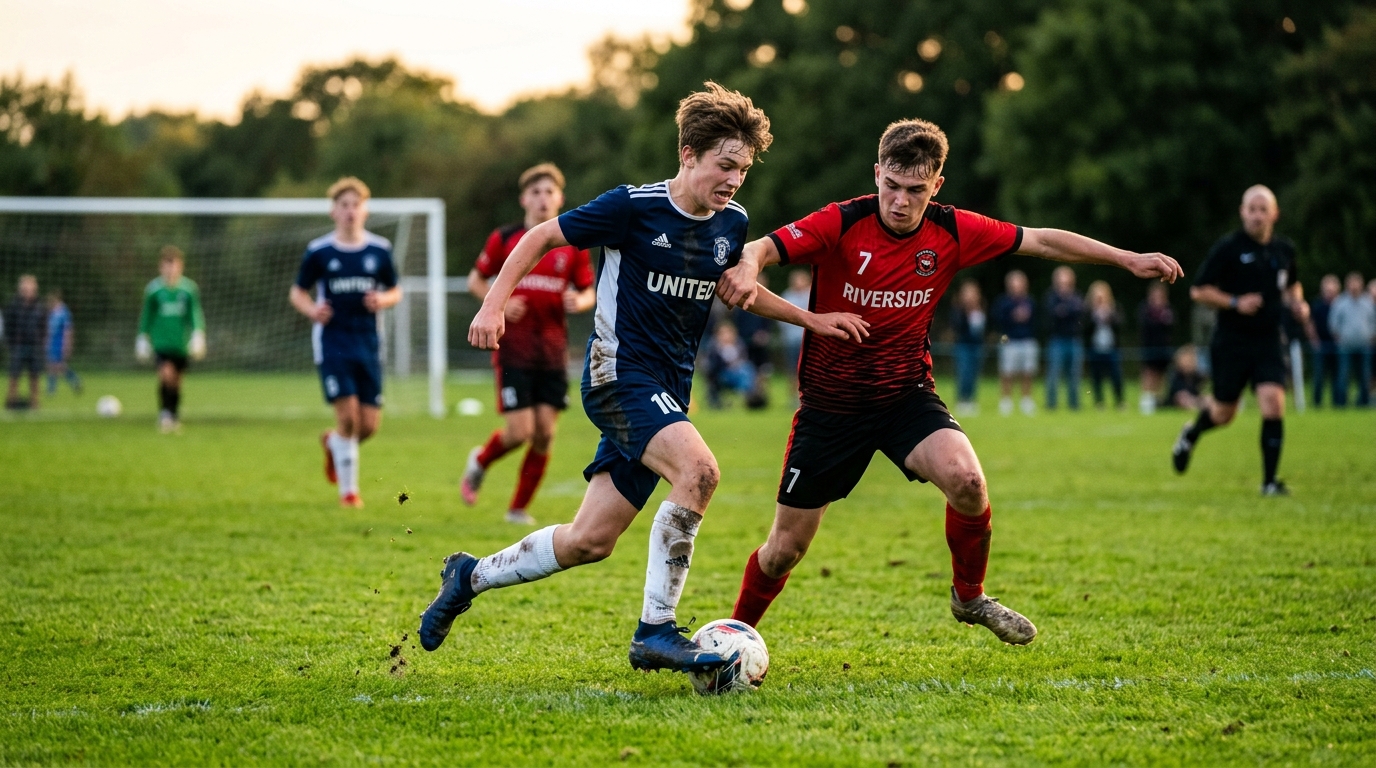
Recently, I took my U15 players to a local tournament. The results were difficult to look at. We lost 5-1, 8-0 and 5-0. The opposition was better prepared, and we struggled to cope with the challenges they presented. However, the players enjoyed the experience. They spent time together, experienced a different competitive environment and had the opportunity to test themselves against teams they were unfamiliar with.
The results had exposed several areas we needed to work on, but they had also given us something valuable — a clearer picture of where we stood and what we needed to improve.
Learning Beyond the Familiar
Another experience that stood out was taking the batch for their first ever eleven-a-side match against a school team. Until then, the players had been accustomed to playing on smaller pitches. Moving to a full-sized ground introduced an entirely different set of challenges. The spaces were bigger, distances between players were greater, and the amount of ground they had to cover was something they had never experienced in a match before.
Some of the problems were immediately visible. Players who had been positioned reasonably well on a smaller pitch found themselves too far away from their teammates. Supporting players had to cover greater distances to offer passing options, while defensive players struggled to maintain compactness across the larger space. Even when we won possession, progressing the ball became difficult because the distances between players were unfamiliar.
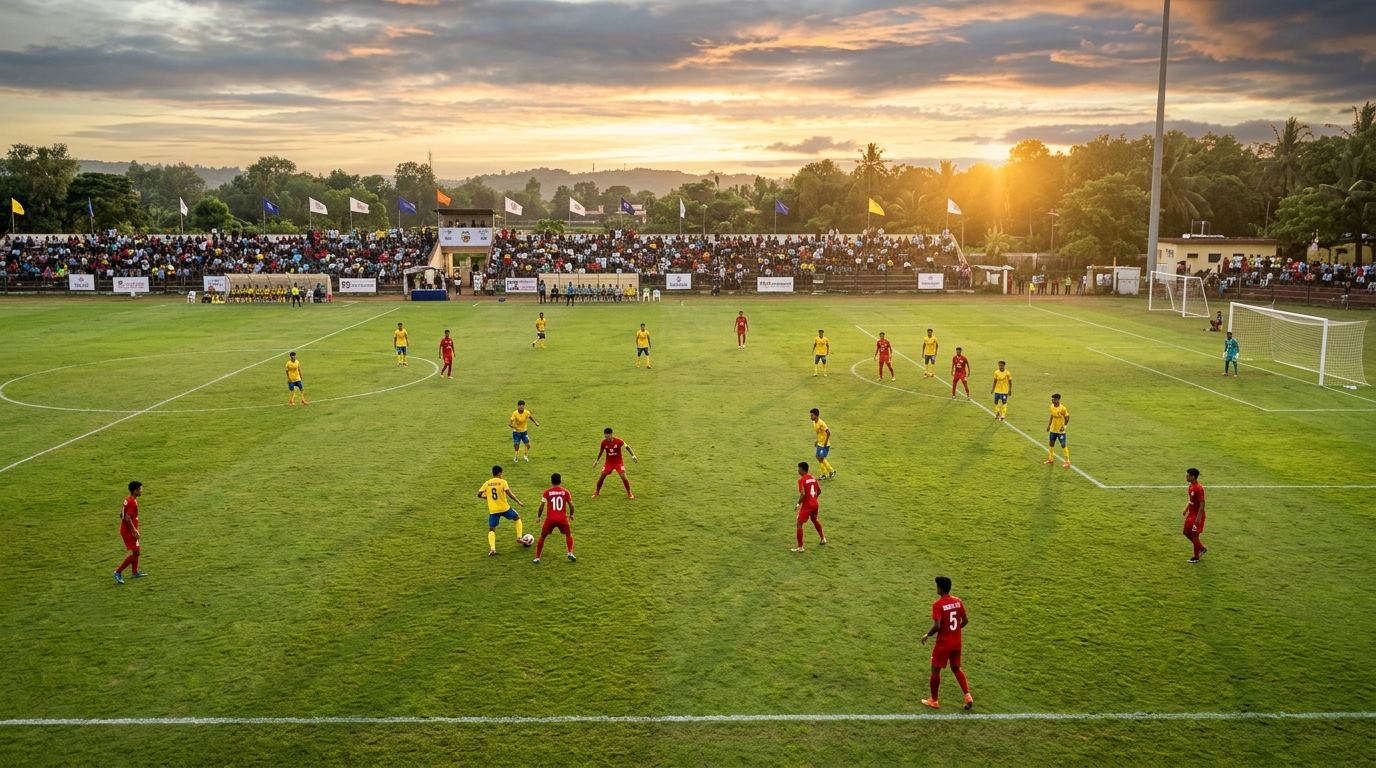
There was also the physical aspect. Playing eleven a side requires players to cover more ground, repeatedly move between attacking and defensive positions, and manage their efforts over a longer period. Our players had not been physically prepared for these demands to the extent required, and the difference became apparent during the game.
It would have been easy to treat these problems as individual mistakes. Instead, the match helped me understand that some of the difficulties came from the environment itself. The players were trying to solve problems they had never encountered at that scale. We adapted our subsequent training sessions accordingly. We worked on positioning and spacing over larger areas, the distances players needed to maintain between one another, and how to move together when possession changed. We also had to consider the physical demands of playing on a full sized pitch.
“These are things we could explain on a tactics board, but experiencing them in a match made the problems much more tangible. The players had felt what it meant to leave too much space between themselves and their teammates.”
When Losing Becomes a Reason to Improve
My U14 batch has presented a different kind of learning experience. Most of the players are beginners, and competitive matches are still relatively new to them. They lose quite often, and the gap between their current abilities and those of more experienced teams can be significant.
However, what has encouraged me is the response I have seen from some of the players after these matches. They return to training wanting to improve. They have experienced the frustration of losing possession, failing to complete passes or struggling against opponents, and they want to do better the next time they play.
For a beginner, even a seemingly simple match situation can be difficult. A player might receive the ball with an opponent approaching and immediately kick it away because they have not yet developed the confidence to control it under pressure. Another might follow the ball instead of moving into space, leaving the team without a passing option. These habits can persist during training, but matches often make their consequences more obvious.
When players have experienced those situations themselves, they sometimes become more receptive to working on them. A player who has repeatedly lost possession might begin paying greater attention to their first touch. Someone who has struggled to find space may start looking around before receiving the ball.
Of course, one match will not suddenly transform a beginner into a confident player. Improvement takes time, and some players need more guidance than others. But the desire to return to training and work on something that went wrong is an encouraging sign.
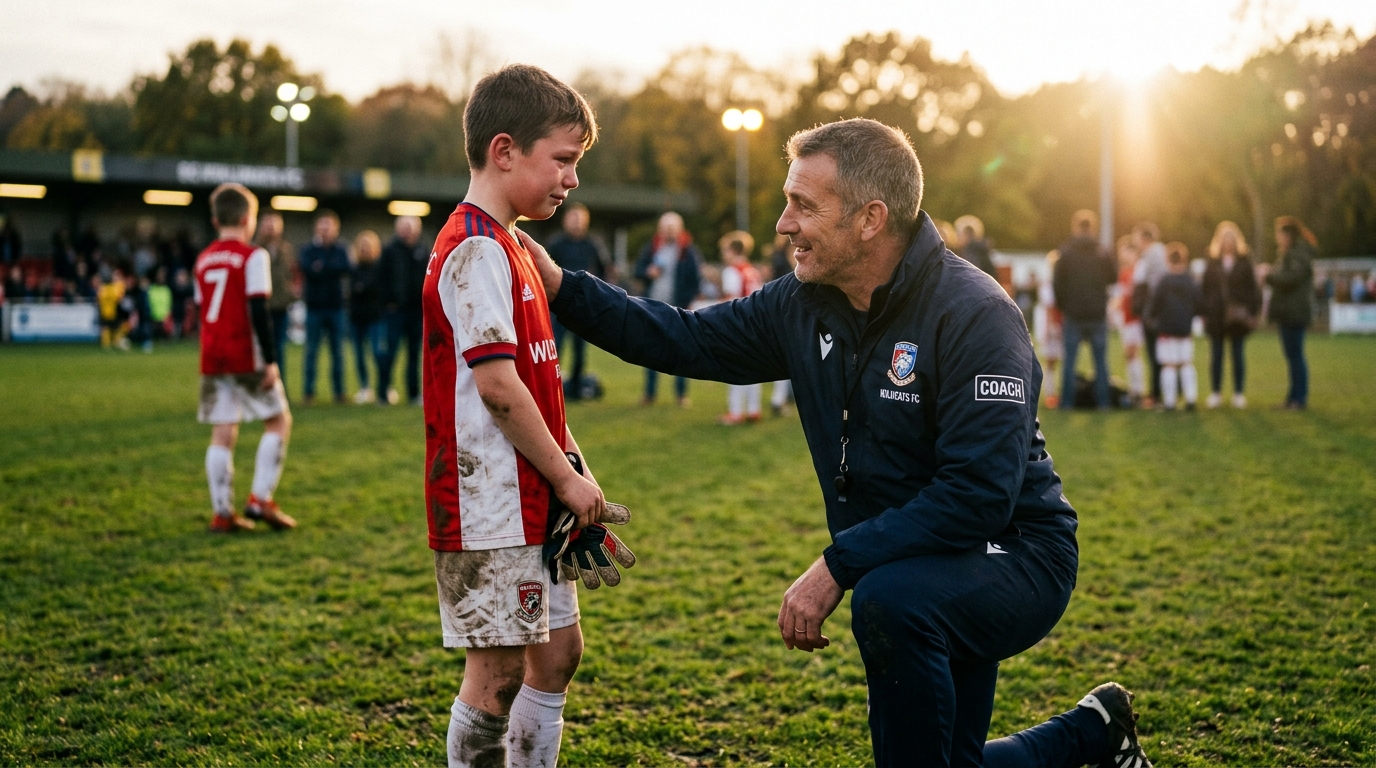
I want my players to understand that losing does not mean they are incapable of becoming better footballers. It means there are things they have not learned yet, situations they have not experienced enough and decisions they have not mastered. The challenge for me as a coach is to help them identify those areas without making every defeat feel like a failure.
Creating Opportunities is Part of Coaching
These experiences have also made me think about my own responsibilities. It is one thing to plan sessions and teach footballing concepts, but I have to consider whether my players are getting enough opportunities to apply what they learn.
I cannot expect beginners to become comfortable in competitive situations if they rarely experience them. Nor can I expect players to understand the demands of eleven a side football simply because they have trained well on a smaller pitch. They need exposure, and that exposure has to be gradual enough for them to learn from it.
I would like to organise more friendlies, take the players to more away matches and give them opportunities to face teams with different strengths. I know the practical challenges will remain, particularly when I have multiple batches to manage, but finding ways to create these opportunities has become an important part of my work.
There is also a broader issue here. Individual coaches and academies can organise friendlies, but a stronger local competition structure would make the process much easier. Regular fixtures would allow players to experience different opponents throughout the season rather than depending on occasional tournaments. For now, I have to work with the opportunities available and make the most of them.
The Next Match Matters
I still want my teams to win. Competition has results, and players should learn to compete seriously, take responsibility and work towards winning together. But I have also started looking beyond the scoreline when evaluating what an experience has given them.
The tournament defeats showed us areas that needed improvement. The eleven a side match revealed how unfamiliar pitch dimensions and physical demands could affect our game. The U14 players have shown me that even beginners can develop a desire to improve when they have something meaningful to work towards.
These experiences have reinforced something I want to carry forward in my coaching journey — my job is not only to prepare players for matches, but also to create opportunities through which they can learn from them.
There will be more defeats, mistakes and frustrating performances. Some players will improve quickly, while others will need more time. I have to remain patient and ensure that the lessons from each match find their way into our training sessions.
“If a player returns after a difficult game determined to improve their first touch, find better passing options or work harder for their teammates, then something important has begun. We may not always see it on the scoreboard, but that is part of development too.”